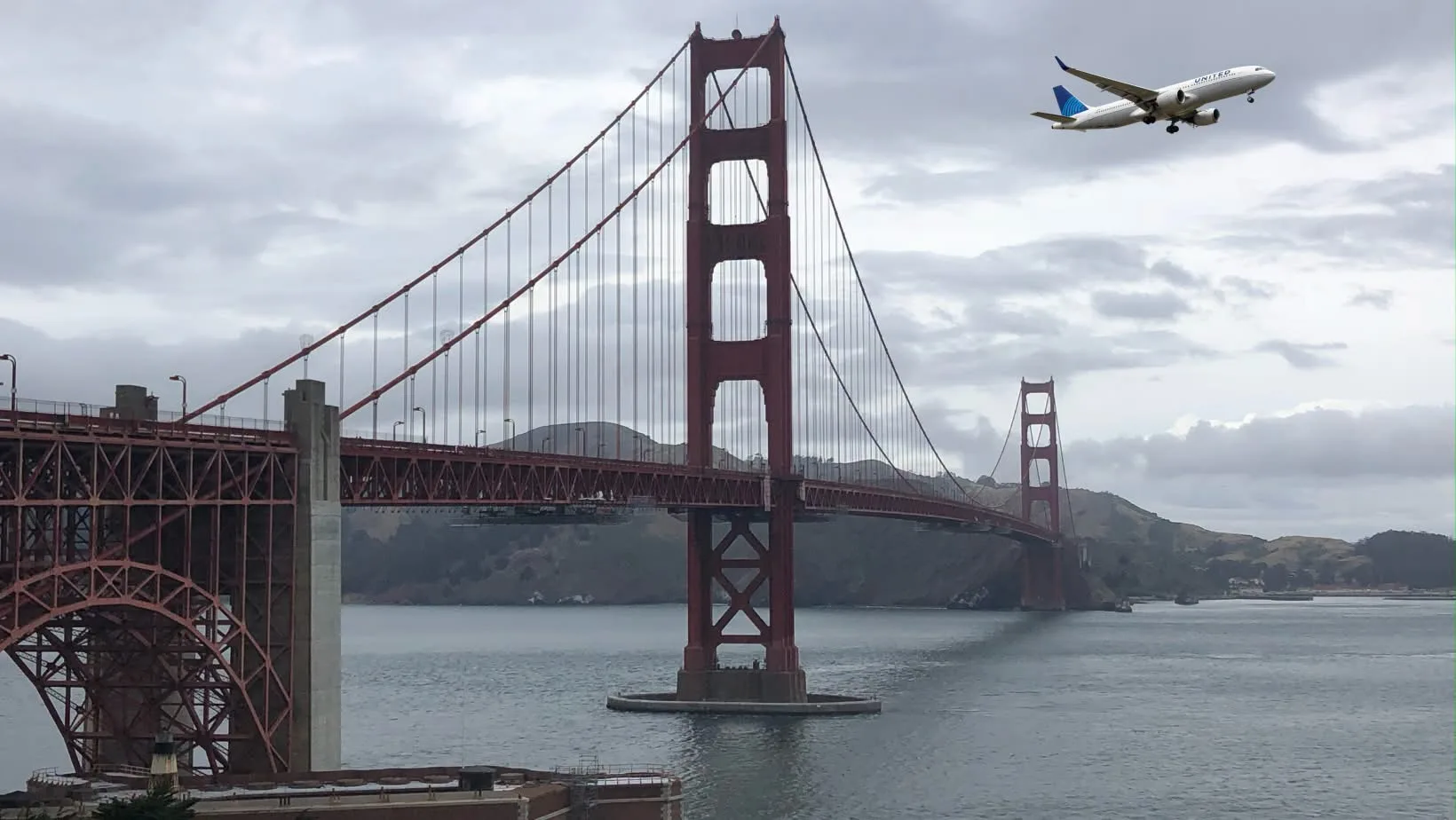
San Francisco (SFO)
SFO is the Pacific gateway and the highest-cost base in the system. The financial picture requires honest analysis, and Diane understands this decision from the inside. She shares daily life with an airline captain, has watched peers navigate the same move, and brings structured analytical thinking to help you evaluate what fits.

Why Diane understands this decision
I share daily life with an airline captain. I understand the pilot world from the inside: the schedule, the seniority math, the short-call premium, the quality-of-life trade-offs that don't show up in a spreadsheet.
I bring structured, analytical thinking to the move-vs.-commute decision. Seniority position, family needs, financial picture, quality of life. They all factor in, and none of them have a single right answer.
San Francisco offers some of the most desirable trip quality in the system and strong Pacific routes, but it demands honest math on housing costs, California taxes, and lifestyle trade-offs.
SFO Shortlist
Not sure which San Francisco areas actually fit your schedule, budget, and family priorities?
Tell me what matters most and I'll narrow SFO to the areas worth seeing, matched to your schedule and budget. No guesswork and no generic list.
Base Overview
SFO: The Pacific hub
San Francisco International Airport (SFO) is the primary West Coast hub and the gateway to Asia-Pacific operations. SFO-based pilots access premium international trips, widebody equipment, and a unique position in the system. For pilots targeting international seniority and Pacific routes, SFO stands out for pilots with those priorities.
The cost of living is the defining challenge. The Bay Area has the highest housing costs of any airline base. California's state income tax, combined with some of the highest home prices in the nation, means a captain's salary stretches significantly less here than in Houston, Denver, or Las Vegas.
The key strategy for SFO pilots is finding the right balance between commute time and housing cost. Moving further from the airport opens up more affordable options, but commute reliability becomes critical for short-call and reserve pilots.
$1.1M - $1.5M
Varies widely by neighborhood
9.3% - 11.3%
Highest marginal rate in the US
15 - 60 min
Depends on neighborhood & mode
The Commuting Reality
What commuting into SFO actually looks like
Many SFO-based pilots commute by air from Sacramento, Stockton, or Tracy, where housing costs are a fraction of Bay Area prices. The commute flight from Sacramento to SFO takes about an hour, and pilots often fly non-rev. But the reliability of that commute depends on load factors and seat availability, which becomes stressful during holiday travel and peak periods.
For pilots who drive from the Central Valley, the commute runs 90 minutes to 2 hours from Stockton or Tracy in good conditions. Interstate 580 and the Altamont Pass corridor are known for wind advisories and fog. In winter, Tule fog can reduce visibility to near zero in the Central Valley, creating dangerous driving conditions and potential delays.
BART provides a direct connection from the East Bay to SFO, making Walnut Creek, Concord, and Pleasant Hill viable for pilots who prefer not to drive. The trade-off is commute time and the longer response window for short calls.
Neighborhoods
Where pilots live near SFO
South San Francisco & San Bruno
The shortest commute in the Bay Area. South San Francisco and San Bruno sit directly adjacent to SFO with a 10-to-20-minute drive. BART access makes this viable without a car. The trade-off is still Bay Area pricing, but these are among the most accessible markets near the airport. Ideal for pilots who prioritize commute reliability above all else.
San Mateo, Foster City & Redwood City
The Peninsula middle ground with better schools and more sun. San Mateo, Foster City, and Redwood City form the corridor that many established airline families gravitate toward. Foster City is a waterfront planned community with a strong family appeal. Redwood City has seen significant development in recent years and tends to be slightly more affordable than its neighbors to the north. San Mateo offers a walkable downtown and a strong sense of community.
Walnut Creek & Concord (East Bay)
Better value with BART access. The East Bay offers more affordable housing with good schools and a more suburban lifestyle. Walnut Creek is popular for its downtown, schools, and access to outdoor recreation. Concord provides more value per square foot. BART to SFO makes the commute viable without driving.
Tracy & Stockton (Central Valley)
The financial play that requires discipline. Tracy and Stockton offer Bay Area housing at Central Valley prices. Many pilots commute by air from Stockton to SFO. The financial savings are real, but the commute is long and weather-dependent. Tule fog in winter can shut down I-580 and make driving dangerous. This works for senior pilots with predictable schedules and crashpad arrangements.
San Jose & Silicon Valley South
Premium living with dual-income math. San Jose and the southern Peninsula offer excellent schools, tech-industry employment for spouses, and a different lifestyle than the city. Caltrain provides a connection to SFO via BART transfer. The prices are high, but dual-income families sometimes find the math works. The commute is manageable during off-peak hours.
Novato & Petaluma (North Bay/Marin County)
Rural feel, open space, and a distance from the density. Novato and Petaluma sit in Marin County north of the Golden Gate. Open space, rolling hills, and a sense of separation from the Bay Area density. The drive runs 30 to 45 minutes to SFO without traffic, but Highway 101 and the Golden Gate Bridge are prone to congestion that can push the commute over 60 minutes. There is no direct BART connection, so pilots drive or take the Golden Gate Transit bus. This works best for pilots off reserve with predictable schedules who can manage the variability of a bridge commute.
SFO Shortlist
Not sure which San Francisco areas actually fit your schedule, budget, and family priorities?
Tell me what matters most and I'll narrow SFO to the areas worth seeing, matched to your schedule and budget. No guesswork and no generic list.
Base-specific considerations for SFO
Fog is the daily reality
SFO's marine layer is at its worst from May through September. Morning fog frequently causes arrival delays and ground stops. This is not a winter-only issue; it is a summer phenomenon that affects your schedule and commute visibility.
Fire season affects air quality
Wildfire smoke can degrade air quality across the Bay Area, particularly from August through November. Major fires have caused haze-related delays and cancellations. It is a seasonal factor that most pilots from other parts of the country do not anticipate.
The highest-cost base in the system
California state income tax, combined with Bay Area housing costs, makes SFO the most expensive airline base. A captain's salary goes significantly less far here. Run the full financial comparison before committing.
Earthquake awareness
Living in the Bay Area means accepting seismic risk. It is a manageable reality for most residents, but it is worth understanding homeowner insurance requirements and the difference between earthquake insurance and standard coverage.
Your Local Expert
I guide the strategy for your move.
The Bay Area real estate market is unlike any other in the country. Prices vary by $500,000 between neighborhoods that are ten minutes apart. School district boundaries matter enormously. And the relationship between commute time and housing cost is steeper here than anywhere else.
I do not pretend to be a Bay Area expert. My role is helping you determine whether SFO makes sense for your career and financial position, and what the true cost of living looks like. I stay involved and make sure you're taken care of, start to finish.
Moving to San Francisco?
Diane provides strategic guidance for the entire decision, from financial analysis to neighborhood selection. No pressure, just a clear picture of what this move means for your career and family.