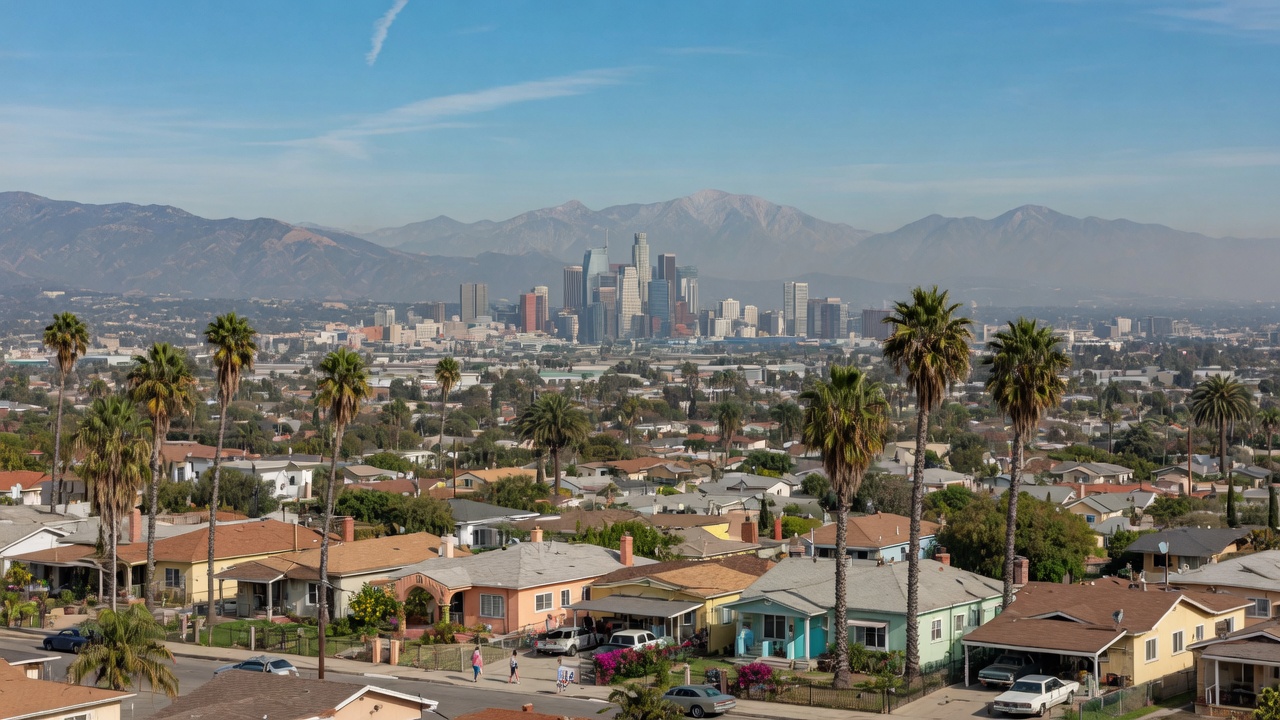
Los Angeles (LAX)
LAX is a key airline base with strong international trip quality, and the move requires understanding LA's traffic in a way no other base demands. Diane provides strategic guidance to help you evaluate whether this move fits.

Why Diane understands this decision
I share daily life with an airline captain. I understand the pilot world from the inside: the schedule, the seniority math, the short-call premium, the quality-of-life trade-offs that don't show up in a spreadsheet.
I bring structured, analytical thinking to the move-vs.-commute decision. Seniority position, family needs, financial picture, quality of life. They all factor in, and none of them have a single right answer.
Los Angeles requires understanding traffic in a way no other base demands, and neighborhood selection is the single most important move you will make.
LAX Shortlist
Not sure which Los Angeles areas actually fit your schedule, budget, and family priorities?
Tell me what matters most and I'll narrow LAX to the areas worth seeing, matched to your schedule and budget. No guesswork and no generic list.

Base Overview
LAX: The West Coast anchor
Los Angeles International Airport (LAX) is a major airline base with extensive domestic service and significant international operations, particularly to Asia-Pacific and Latin America. LAX offers a diverse trip mix, widebody opportunities, and the lifestyle appeal of Southern California.
California's state income tax is a significant financial factor. Housing costs in desirable areas rival San Francisco, but the LA metro is vast, and there are meaningful price differences between neighborhoods. The key is finding the right balance between commute reliability, housing costs, and lifestyle.
Traffic is the defining challenge. LA's commute patterns are different from any other base. The good news: pilot schedules often avoid peak traffic. The bad news: when traffic hits, it hits harder here than anywhere else in the country.
The Commuting Reality
What commuting into LAX actually looks like
Los Angeles has the worst traffic in the country, and LAX sits at the epicenter. The 405 freeway through the Westside is one of the most congested corridors in the nation. During peak hours, a 20-mile drive from Torrance to LAX can take 50 minutes to over an hour. From the Inland Empire, the drive stretches to 1.75 to 2+ hours during peak times.
The saving grace for pilots: off-peak travel times. Most pilot report times fall outside the worst of rush hour, and late-night or early-morning commutes are significantly faster. The key is choosing a neighborhood where the off-peak commute to LAX stays under 30 minutes, because short calls follow the same rules here as everywhere else.
Some LAX-based pilots commute from the Inland Empire, where housing costs vary by how far east you go. Rancho Cucamonga, Ontario, and Riverside offer prices below the coastal LA metro with off-peak commutes of 45 to 70 minutes. San Bernardino, further out, is the most affordable option in the region. The drive can exceed 2 hours during peak traffic. For senior pilots with predictable schedules and fewer short calls, the math can work. For anyone on reserve, it is risky.
Neighborhoods
Where pilots live near LAX
Torrance & South Bay
The pilot neighborhood near LAX. Torrance and the South Bay offer the most reliable commute to LAX with a more suburban, family-friendly feel than central LA. Torrance has strong schools, good shopping, and a diverse community. The proximity via the 405 or surface streets makes this the go-to choice for pilots who need a reliable short commute.
El Segundo & Manhattan Beach
The shortest commute, premium price. El Segundo sits directly adjacent to LAX, making it the closest community with a residential feel. Manhattan Beach, just south, offers beach living with top-rated schools. The commute is under 20 minutes for both, but the home prices are among the highest in the LA metro.
Culver City, Marina del Rey & Playa Vista
Urban and modern west of LAX. This corridor offers a contemporary lifestyle with walkable neighborhoods, dining, and waterfront culture. Playa Vista is a newer planned community with modern condos and townhomes. Culver City has its own downtown with a strong food scene. Marina del Rey brings a waterfront rhythm with boat culture that is different from the beach cities to the south. Inventory in this area leans heavily toward condos and townhomes.
Pasadena & Arcadia
Quality of life, longer commute. The San Gabriel Valley offers excellent schools, tree-lined neighborhoods, and a more traditional suburban lifestyle. Pasadena has a vibrant Old Town and cultural institutions. Arcadia is known for top-ranked public schools. The commute runs via the 210 and 110 freeways, longer but viable during off-peak pilot hours.
Valencia & Santa Clarita
Suburban space north of the San Fernando Valley. Valencia and Santa Clarita sit along the I-5 corridor and offer strong schools, planned suburban neighborhoods, and significantly more housing for the price than anything closer to the airport. The communities are family-oriented with parks and the kind of space that is hard to find near the Westside. Single-family homes in this area typically run $600,000 to $850,000.
Rancho Cucamonga & Ontario
Closer Inland Empire, established communities. Rancho Cucamonga and Ontario are the more established Inland Empire cities, closer to LAX than San Bernardino. They offer good schools, mountain views, and well-developed retail and dining. Riverside sits in a similar commuter range with slightly lower price points. The off-peak commute is 45 to 70 minutes, but peak traffic can push past 2 hours. This works for senior pilots with predictable schedules, less so for reserve.
Riverside
Established Inland Empire city, closer-in than San Bernardino. Riverside offers more affordable pricing than the coastal LA metro while keeping the commute from becoming unmanageable. The city has a strong historic downtown, several good school districts, and a growing retail and dining scene. Single-family homes in the $600,000 to $700,000 range put Riverside in a similar bracket to Rancho Cucamonga and Ontario, with the slightly longer drive reflecting the value gap.
San Bernardino
The most affordable option in the LA metro. San Bernardino sits at the eastern edge of the Inland Empire and offers the lowest housing prices of any city near LAX. Single-family homes in the $450,000 to $550,000 range make this the only Inland Empire option that competes with non-California housing costs. The trade-off is the longest commute of any neighborhood near LAX, 60 to 90 minutes off-peak and potentially over 2 hours during peak traffic. This works for senior captains with predictable schedules who know what that drive costs in time, but for reserve or short-call pilots the distance creates real schedule pressure.
LAX Shortlist
Not sure which Los Angeles areas actually fit your schedule, budget, and family priorities?
Tell me what matters most and I'll narrow LAX to the areas worth seeing, matched to your schedule and budget. No guesswork and no generic list.
Base-specific considerations for LAX
Traffic is the dominant variable
LA has the worst traffic in the nation. A 20-mile commute can take over an hour during peak times. Neighborhood selection is the single most important decision for LAX-based pilots. Off-peak travel times are your friend, but plan for peak-hour disruptions.
Fire season and Santa Ana winds
Traditional wildfire season runs June through November, but the most destructive recent fires in the LA basin, including the January 2025 Palisades fire, have occurred outside that window, driven by Santa Ana winds in winter months. The 2018 Woolsey Fire and 2025 Palisades fire demonstrated how quickly conditions can change. Understanding the full risk picture, not just the official season dates, matters for this decision.
California taxes compound the cost
California's state income tax, combined with LA housing costs, makes LAX one of the most expensive bases. A captain's salary stretches less here than in Houston, Las Vegas, or Orlando. Run the full financial comparison.
Earthquake preparedness
Living in LA means accepting seismic risk. Earthquake insurance is separate from standard homeowner's policies and can be expensive. It is a real cost factor that pilots relocating from other parts of the country should understand.
Your Local Expert
I guide the strategy for your move.
Los Angeles real estate is hyper-local. School district boundaries, traffic corridors, fire zones, and price points can change dramatically within a few miles. You need someone who understands the nuances of each neighborhood and which ones actually work for a pilot's commute to LAX.
My role is the strategic analysis: Does LAX make sense for your career and finances? What is your real commute tolerance? Which part of the LA metro fits your priorities and budget? I stay involved and make sure you're taken care of, start to finish.
Moving to Los Angeles?
The right decision about the move comes first. I provide strategic guidance for pilots relocating to Los Angeles, from financial analysis through neighborhood selection.